
Accounting and tax services are often treated as routine tasks, something businesses handle just to stay compliant. But in reality, your financial strategy can either support your growth or quietly slow it down.
Many businesses don’t realize that outdated systems, poor planning, or unclear financial data can hold them back. It doesn’t happen suddenly it builds over time. And by the time it becomes visible, it’s already affecting decisions.
So the real question is not whether you have an accounting system, but whether it is actually helping your business grow.

Signs Your Current Strategy Might Be Holding You Back
Sometimes the problem is not obvious. Everything may look fine on the surface, but small inefficiencies start creating bigger issues.
Common signs to look for:
- You don’t have a clear view of your monthly profits.
- Cash flow feels unpredictable.
- Reports are delayed or difficult to understand.
- Tax planning happens at the last minute.
- Financial decisions are based on assumptions.
Quick Comparison
| Situation | Weak Strategy | Strong Strategy |
| Financial Visibility | Limited | Clear and updated |
| Decision Making | Guess-based | Data-driven |
| Tax Planning | Reactive | Planned in advance |
| Growth Readiness | Uncertain | Well-prepared |
This is where many businesses start exploring better options, including cpa services for small business, to bring more structure into their finances.
Why Traditional Accounting Is No Longer Enough
In the past, accounting was mainly about maintaining records and filing taxes. But today, businesses need more than that.
They need insights.
They need planning.
They need clarity.
What modern businesses expect:
- Real-time financial data.
- Better control over expenses.
- Forecasting and budgeting support.
- Strategic tax planning.
Pie Chart: What Businesses Expect from Financial Services
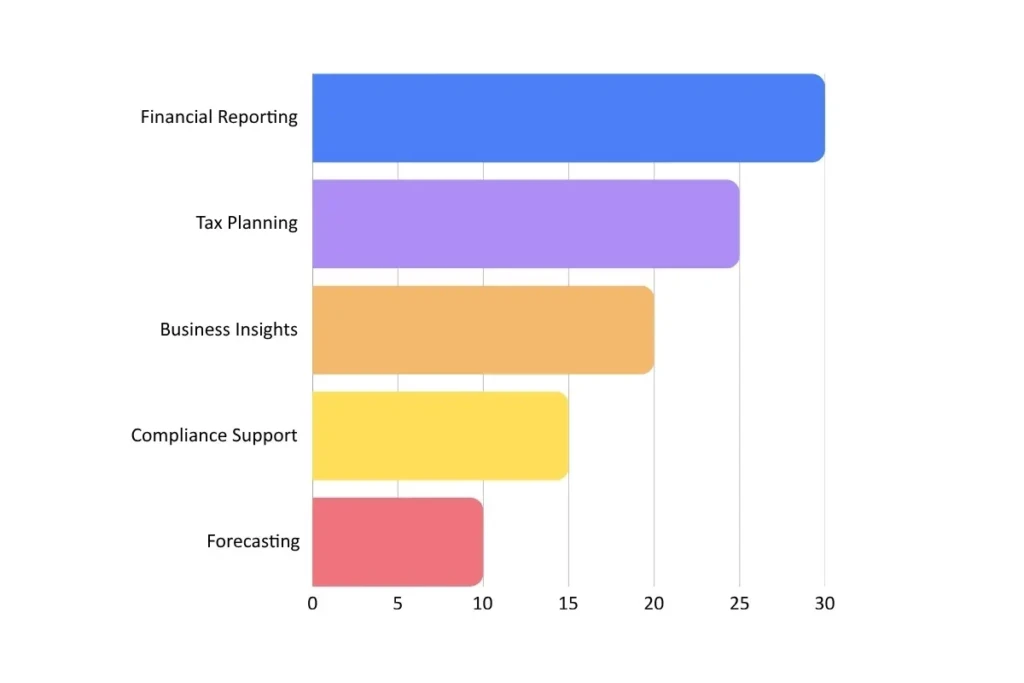
This shows that businesses are no longer looking for basic services. They want support that helps them grow.
How the Right Strategy Can Change Your Business Direction
When your accounting and tax strategy is aligned with your business goals, things start to feel different. You don’t just manage numbers—you start using them in a practical way.
What changes with the right approach:
- You understand your financial position clearly.
- You plan expenses instead of reacting to them.
- You reduce unnecessary costs.
- You make more confident business decisions.
Simple Comparison
| Area | Without Proper Strategy | With the Right Strategy |
| Financial Clarity | Unclear or delayed | Clear and updated |
| Expense Management | Reactive | Planned |
| Cost Control | Hard to track | Better control |
| Decision Making | Based on assumptions | Based on real data |
| Business Growth | Slow or uncertain | More structured and steady |
This kind of structured approach is often supported through client advisory services, where experts guide businesses beyond basic accounting.
Where Most Businesses Go Wrong
The problem is not always lack of effort. Sometimes it’s about doing the right things at the wrong time.
Common mistakes:
- Treating accounting as a one-time task.
- Ignoring financial reports until needed.
- Not planning taxes in advance.
- Delaying professional support.
These habits may not seem serious at first, but over time they affect growth and stability.
Can Better Accounting and Tax Planning Actually Improve Growth?
This is something many business owners wonder about.
1. How It Helps in Real Growth
When your finances are clear and well-managed:
- You can plan expansion with confidence.
- You avoid sudden financial issues.
- You use resources more efficiently.
Growth becomes more structured instead of uncertain.
2. What Happens Without Proper Planning
If accounting and tax strategy are weak:
- Decisions are delayed or incorrect.
- Costs increase without control.
- Compliance risks become higher.
In many cases, businesses don’t fail because of lack of demand—they struggle because of poor financial management.
What You Should Focus On Moving Forward
Improving your accounting and tax strategy does not mean making everything complicated. It simply means making it more useful.
Key areas to focus on:
- Keep financial data updated regularly.
- Review reports monthly, not yearly.
- Plan taxes in advance.
- Take expert advice when needed.
Even small improvements in these areas can create a big impact over time.
Conclusion: Is It Time to Rethink Your Strategy?
If your current system is only helping you stay compliant but not helping you grow, then it may be time to rethink your approach.
Accounting and tax are not just back-end functions anymore. They are tools that can guide your business in the right direction.
Many growing companies are now choosing smarter and more structured solutions, including accounting services in india, to improve efficiency and decision-making.
In simple terms, the right strategy does not just manage your business—it helps move it forward.
FAQs
Q1. Why is tax strategy important?
A tax strategy helps you stay in control instead of figuring things out at the last moment. It gives you a clearer idea of what you need to pay and when. This makes it easier to avoid mistakes and manage your finances better.
Q2. What are the best tax strategies?
There isn’t one fixed strategy that works for everyone. Most businesses benefit from keeping records updated, planning expenses in advance, and reviewing their numbers regularly. What works best usually depends on your business type.
Q3. Is a tax strategist worth it?
It can be helpful, especially when things start getting complicated. A tax strategist can point out things you might miss and help you plan better. It also saves time and reduces stress around tax-related work.