
Off shore accounting used to be something companies considered only when they wanted to reduce expenses. That’s no longer the case.
Today, many CFOs are making the switch for a completely different reason they want finance operations that move faster, scale easily, and don’t create pressure every time the business grows.
And interestingly, most companies are not openly talking about it.
Behind the scenes, finance leaders are restructuring how accounting work gets done. Instead of building large in-house teams, they’re choosing smarter support models that give them flexibility without sacrificing quality.
The shift is happening slowly, but it’s happening everywhere.

Finance Teams Are Under More Pressure Than Before
A few years ago, accounting departments mainly focused on bookkeeping, reporting, and compliance. Now the expectations are much bigger.
CFOs are expected to:
- Help leadership make business decisions.
- Manage cash flow carefully.
- Reduce operational costs.
- Keep up with changing regulations.
- Deliver faster financial reports.
- Support expansion plans.
At the same time, hiring experienced accounting professionals locally has become expensive and difficult.
This is one reason why businesses have started exploring offshore accounting in a more serious way.
What CFOs Are Looking For Today
| Business Need | What Companies Want |
| Faster reporting | Real-time financial visibility |
| Cost control | Lean finance operations |
| Business growth | Scalable accounting support |
| Better compliance | Experienced finance professionals |
| Flexibility | Teams that can adapt quickly |
Most companies are no longer asking, “Should we outsource accounting?”
Now they’re asking, “How do we build a finance function that actually supports growth?”
Offshore Accounting Is Becoming a Long-Term Strategy
Earlier, outsourcing was treated like temporary support. Businesses would outsource small tasks during busy periods and keep everything else internally.
That thinking has changed.
Companies now want accounting systems that can grow with them. They need teams that can handle reporting, reconciliations, payroll, compliance, and forecasting without slowing operations down.
That’s where Global outsourcing services are helping modern finance teams.
Instead of adding more pressure internally, CFOs are creating support structures that are flexible and easier to manage.
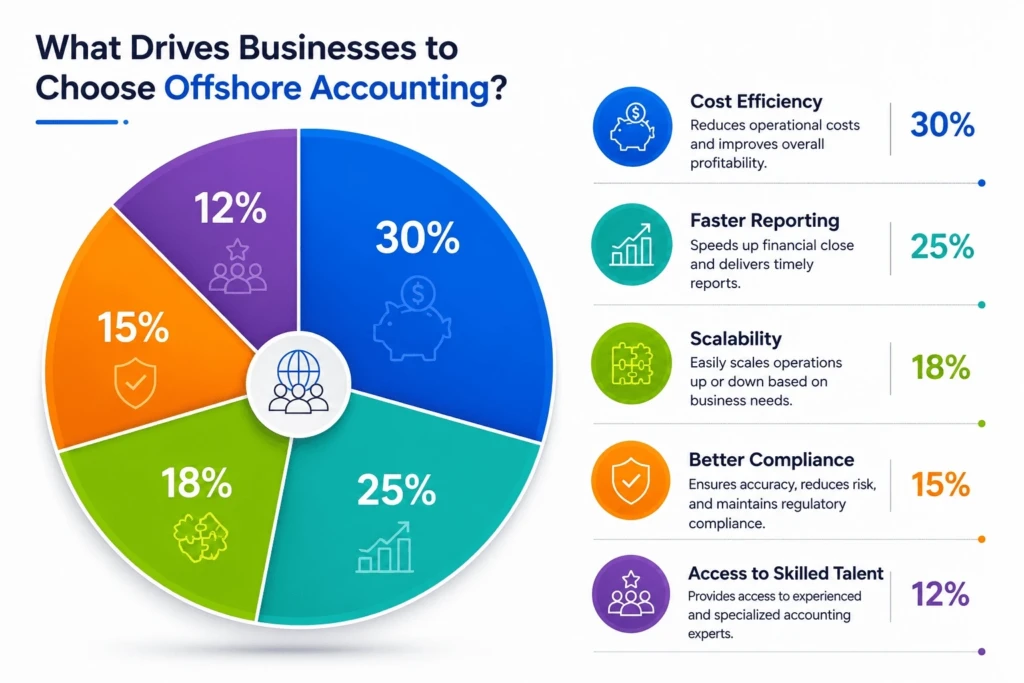
One important thing to understand is this: businesses are not outsourcing because they want “cheap accounting.”
They’re outsourcing because they want efficient accounting.
Why Offshore to India Models Continue to Grow
Over the last decade, India has become one of the strongest destinations for accounting support services. Businesses looking to move offshore to india often mention the same reasons repeatedly skilled professionals, process-driven systems, and strong knowledge of international accounting standards.
But there’s another reason too.
Indian accounting firms have become extremely comfortable working with global clients remotely. That experience matters.
What Businesses Usually Gain
Access to Experienced Teams
Many offshore teams already work with:
- US businesses.
- UK accounting firms.
- Australian companies.
- International startups.
This means they understand global reporting expectations from day one.
Faster Work Cycles
Because of time zone differences, many businesses wake up to completed reports, updated books, or reconciled statements.
Easier Scaling
Instead of spending months hiring internally, companies can expand support much faster through offshore teams.
How Offshore Accounting Supports Growth
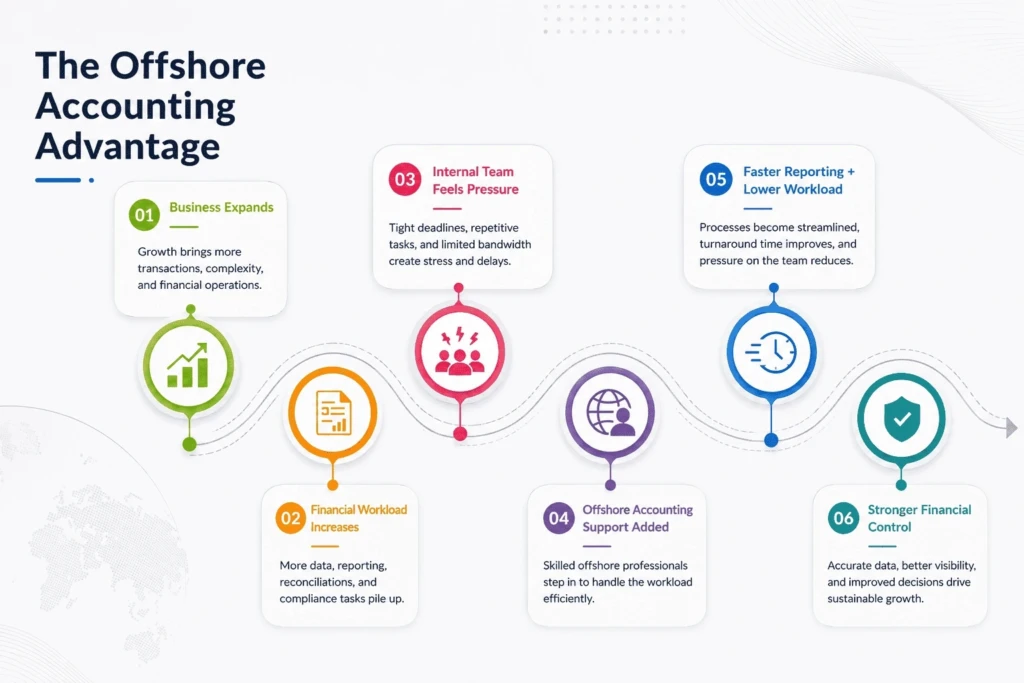
For many CFOs, this creates breathing room that internal teams often struggle to achieve alone.
7 Common Myths About Off Shore Accounting — Debunked
Even now, some companies hesitate because they still believe old assumptions about offshore accounting.
Let’s clear a few of them up.
Myth #1: The quality won’t match in-house teams.
In reality, many offshore firms follow structured review systems and international accounting practices.
Myth #2: Communication becomes difficult.
Most teams now work through cloud platforms, video calls, and shared systems daily.
Myth #3: Data won’t be secure.
Professional firms invest heavily in encrypted systems and secure workflows.
Myth #4: Only large companies outsource accounting.
Small and medium-sized businesses often benefit the most because they need flexible support.
Myth #5: Offshore teams don’t understand compliance.
Experienced offshore professionals regularly work with IFRS, US GAAP, and international tax processes.
Myth #6: It’s only about reducing cost.
Businesses also gain speed, flexibility, and operational stability.
Myth #7: Transitioning is messy.
Most modern firms already have onboarding systems designed to make the process smooth.
The biggest surprise for many businesses is this: offshore accounting often feels more organized than the systems they were using before.
Can Offshore Accounting Actually Help CFOs Make Better Decisions?
In many cases, yes.
When finance reporting becomes more consistent and organized, leadership teams naturally make decisions faster.
That’s because they finally have:
- Better visibility into cash flow.
- Cleaner financial records.
- Faster month-end closing.
- Reliable reporting data.
- More time for strategic planning.
This is one reason businesses continue investing in offshoring accounting services even after the initial cost benefits are achieved.
The Role of Accounting Has Changed
Accounting is no longer just about recording transactions.
Today, finance teams directly influence:
- Expansion planning.
- Budget forecasting.
- Investor confidence.
- Operational decisions.
- Risk management.
And CFOs know they cannot do all of this effectively while drowning in day-to-day accounting workload.
“Efficiency is doing things right; effectiveness is doing the right things.” — Peter Drucker
That quote explains exactly why so many finance leaders are quietly rethinking how accounting operations should work.
Conclusion
The move toward offshore accounting is not just another business trend. It reflects a bigger shift in how modern finance departments are being built.
Companies today want accounting systems that are flexible, reliable, scalable, and efficient. They want finance teams that support growth instead of slowing it down.
That’s why more businesses are now working with experienced accounting firms in india that understand global accounting standards, remote collaboration, and modern financial operations.
For many CFOs, offshore accounting is no longer a backup option.
It’s becoming the smarter way to run finance.
FAQs
Q1. Are CPAs being offshored?
Yes, many CPA firms are now using offshore accounting support to manage bookkeeping, tax preparation, audit assistance, and reporting work. This helps them reduce workload, improve efficiency, and focus more on client advisory services.
Q2. What are the biggest challenges that you may face in accounting?
Some common accounting challenges include managing compliance, handling large volumes of financial data, maintaining accuracy, and meeting reporting deadlines. Businesses also struggle with hiring skilled professionals and keeping up with changing regulations.
Q3. Does a CFO need to know accounting?
Yes, a CFO should have strong accounting knowledge because it helps in understanding financial reports, cash flow, budgeting, and business performance. Accounting knowledge also supports better financial planning and strategic decision-making.